

Stainless Steel Crown Size Chart for Primary Molars
A stainless steel crown size chart for all eight primary molars, with Universal and Palmer notation, how to pick the first size, and signs a crown is off.
By the KTR Crowns team · · 6 min read
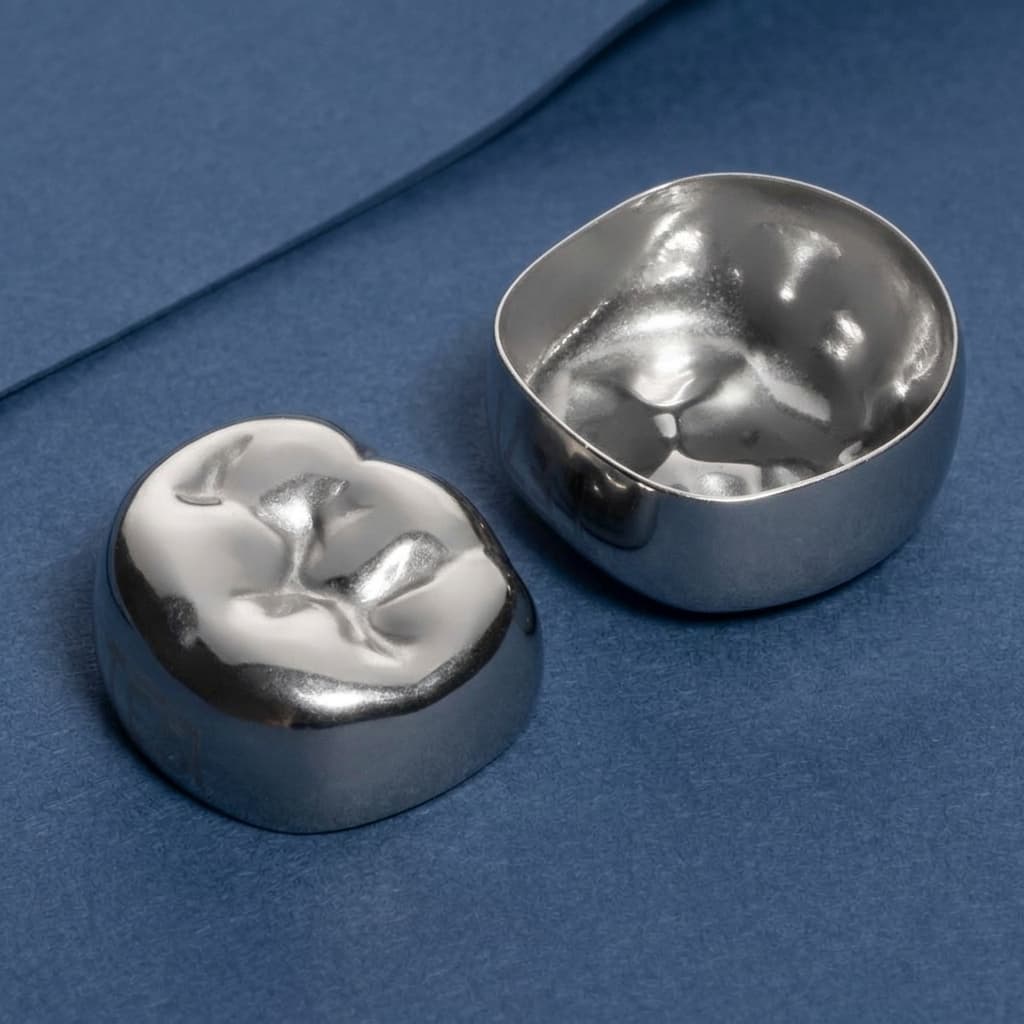
Stainless steel crowns only work as well as the size you pick. A crown that is one size off either rocks on the tooth, opens the margin, or refuses to seat without force. This chart covers every primary molar position in the KTR stainless steel line, how the notation on the crown maps to the tooth, and a quick way to land on the right size before you open the cement.
The KTR stainless steel crown size chart
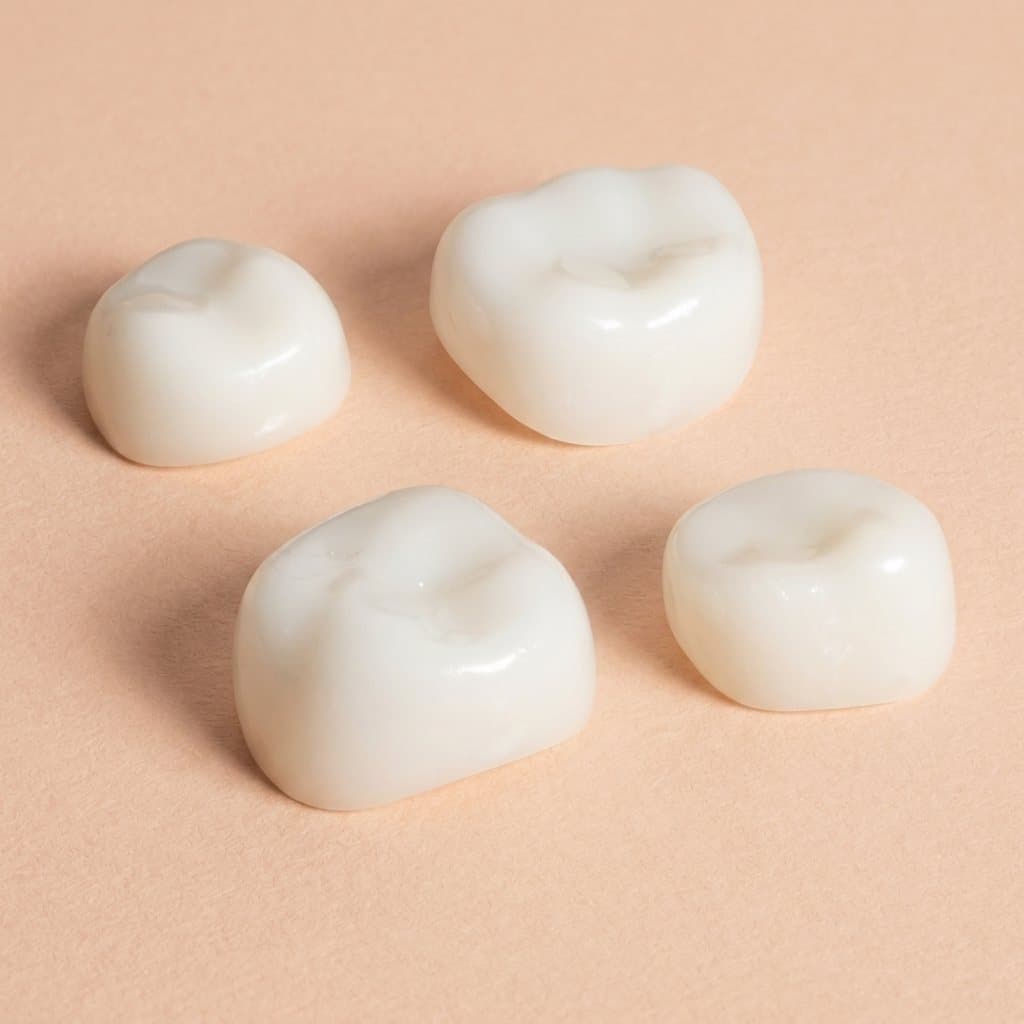
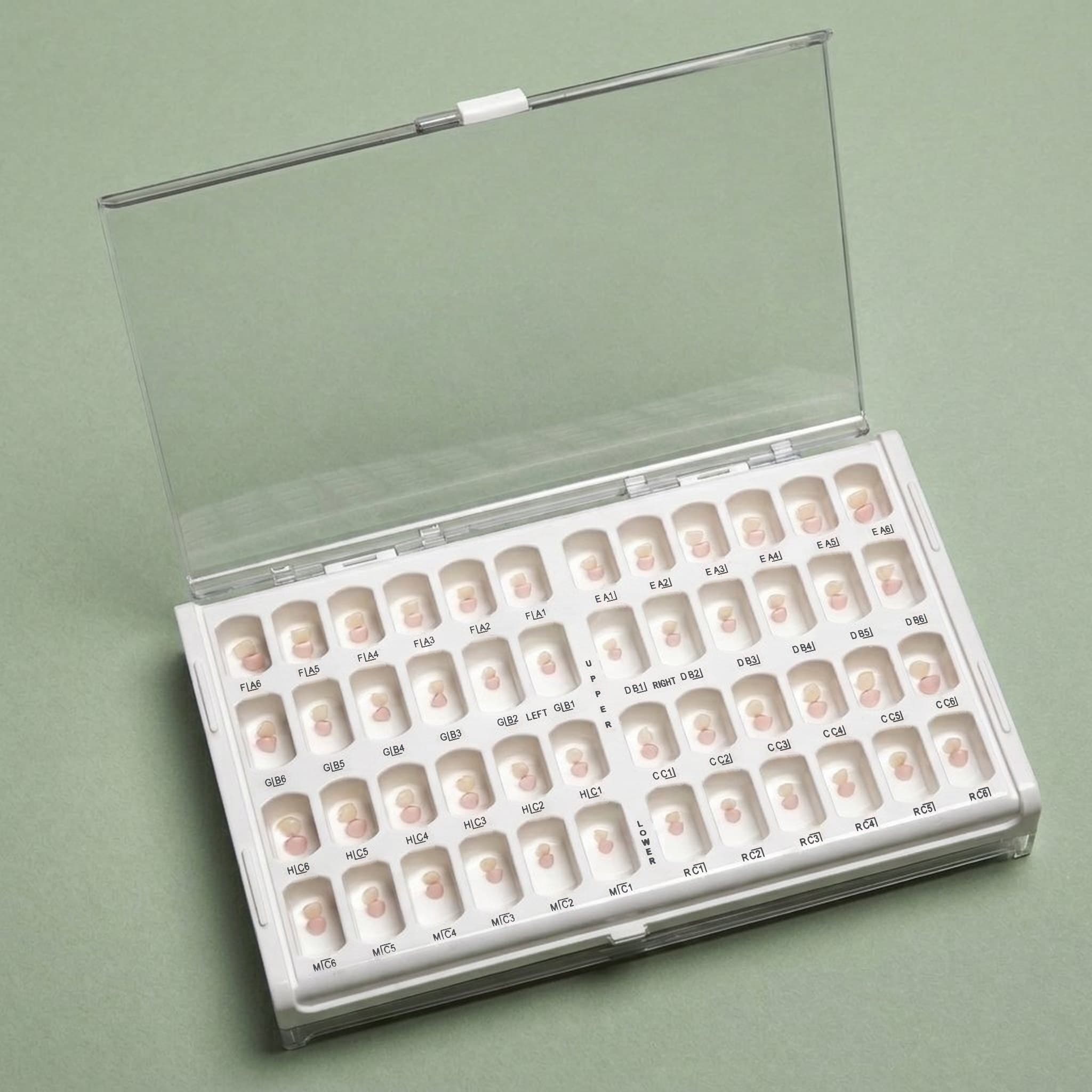
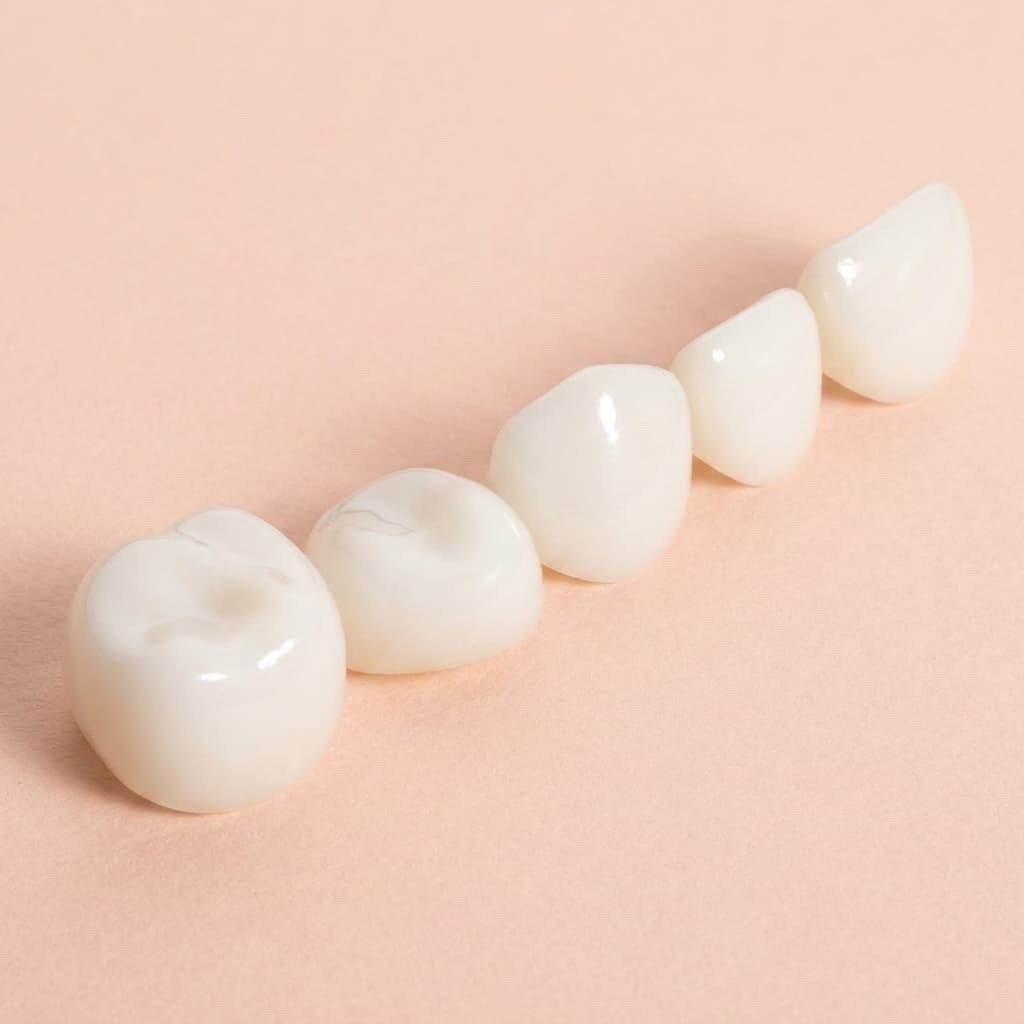
KTR stainless steel crowns cover all eight primary molars, with six sizes for each position: 48 crowns in total. Every crown is laser-etched with the tooth and size so you can confirm what is in your hand at a glance.
| Tooth (Universal) | Tooth name | Palmer | KTR code | Sizes |
|---|---|---|---|---|
| A | Upper right second primary molar | UR E | EUR | 2 to 7 |
| B | Upper right first primary molar | UR D | DUR | 2 to 7 |
| I | Upper left first primary molar | UL D | DUL | 2 to 7 |
| J | Upper left second primary molar | UL E | EUL | 2 to 7 |
| K | Lower left second primary molar | LL E | ELL | 2 to 7 |
| L | Lower left first primary molar | LL D | DLL | 2 to 7 |
| S | Lower right first primary molar | LR D | DLR | 2 to 7 |
| T | Lower right second primary molar | LR E | ELR | 2 to 7 |
The KTR code reads as tooth, arch, side: E or D for second or first molar, U or L for upper or lower, then R or L for right or left. So DLR is the lower right first primary molar (S), and EUL is the upper left second primary molar (J). The same position, size and notation are what you see on the crown, the refill box and the interactive size matrix.
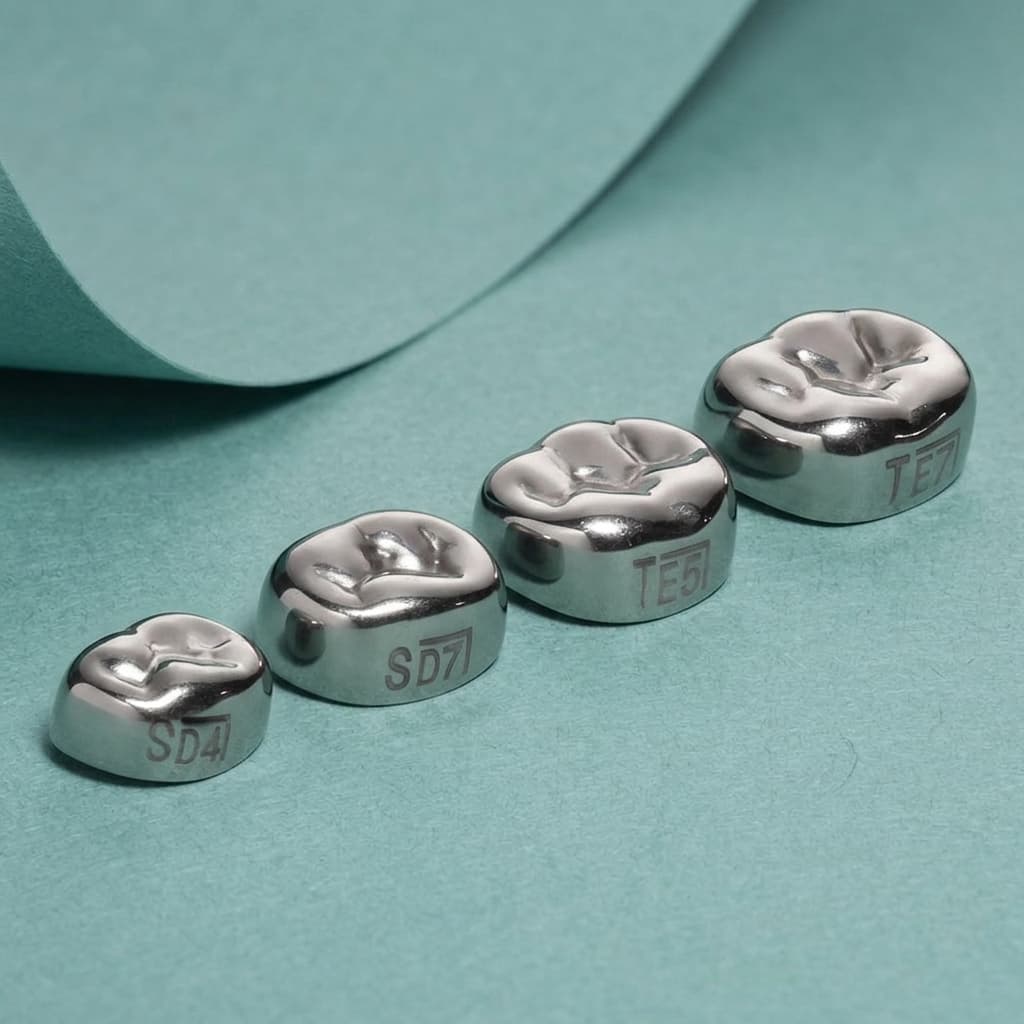
8 positions, 6 sizes each
Stainless Steel Crowns
Reading the markings on the crown
Each KTR crown carries dual markings in Universal and Palmer notation, laser-etched rather than printed, so they stay readable after sterilization of tried-in crowns. That matters most mid-procedure: when an assistant hands you the next size up, you can confirm tooth and size without hunting for the box.
How to choose the first size
Size selection for stainless steel crowns is driven by the mesiodistal dimension of the tooth. KTR's instructions for use describe the sequence:
- Measure the mesiodistal width intraorally with a Boley gauge (calipers work too) before and after preparation.
- Pick the crown that best matches that measurement and replicates the natural tooth dimension.
- Cross-check against any preoperative measurements, especially if the tooth was broken down.
- Try in. For mandibular molars, seat lingually first and then press buccally. For maxillary molars, seat the buccal side first, then lingual.
- Check the margin with an explorer and the occlusion against the opposing arch, then adjust or change size.
If a proximal wall is lost to decay, the tooth itself is no longer a reliable ruler. Measure the space between the adjacent teeth, or use the contralateral molar as a reference. When you are between sizes and unsure, the KTR sizing guide recommends starting with the second-smallest size for the tooth and stepping up if the crown does not seat.
What a correct fit feels like
A properly sized stainless steel crown snaps into place with firm but gentle finger pressure. The belled, pre-crimped margin flexes over the cervical bulge of the primary molar and then grips below it. You should feel that click, and the crown should not lift off when you release pressure.
| What you see | Likely cause | What to do |
|---|---|---|
| Crown will not seat without heavy force | Too small, or contacts or occlusion not reduced enough | Check proximal clearance and occlusal reduction; if the prep is adequate, go up a size |
| Crown rocks or spins after seating | Too large, or margin not adapted | Try one size down; if it will not seat, crimp the margin |
| Open margin on one surface | Margin not adapted to that wall | Contour and crimp that section |
| Marked gingival blanching | Crown too long | Trim slightly at the gingival margin, then recontour |
| Crown sits high in occlusion | Too little occlusal reduction, or crown not fully seated | Reduce occlusal and re-check seating on a radiograph |
| Open contacts with neighbors | Crown too small mesiodistally | Go up a size, or adapt the interproximal walls with contouring pliers |
Change size or adapt the crown?
KTR crowns come pre-trimmed, belled and crimped, so many cases seat without modification. When they do not, the rule of thumb is simple: change the size when the problem is mesiodistal, adapt the crown when the problem is at the margin. A crown that is the right width but gaps at one wall needs contouring and crimping. A crown that leaves open contacts or rocks on a well-prepared tooth needs a different size.
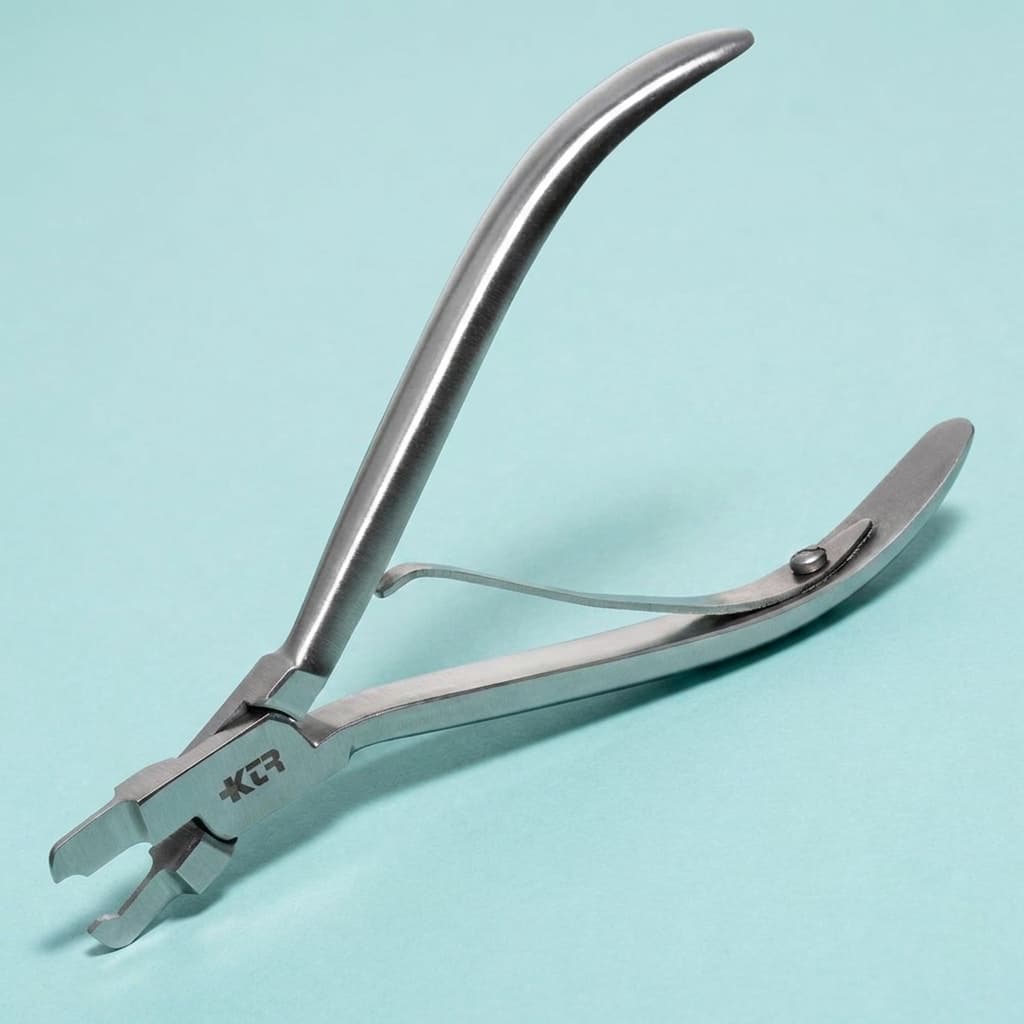
If you do need to modify the crown, mark the gingival contour, trim conservatively, recontour with contouring pliers, crimp the margin all the way around and polish the edge so it does not irritate the tissue. Our guide on how to crimp a stainless steel crown walks through each step, and the same sizing logic applies whether you are preparing the tooth or using the Hall technique.
First molars and second molars
First primary molars are smaller teeth, and they have a pronounced mesiobuccal cervical bulge, so the snap fit is easy to feel but the margin needs attention on the buccal. Second primary molars are larger, carry more occlusal load and often sit next to an erupting first permanent molar, so check the distal contact and the occlusion carefully. Tooth size also varies between patients and populations, which is why every position comes in six sizes: measure each time rather than defaulting to the size you used last.
Keep the sizes you use organized
Most sizing mistakes happen at the tray, not the tooth. A few habits help:
- Store crowns by position and size so the sizes on either side of your pick are one reach away.
- Keep tried-in crowns separate until they are cleaned and sterilized; KTR size markings are designed to stay legible through normal sterilization cycles.
- Track which sizes you reorder most. Most practices find a handful of sizes per position do most of the work, and single refill boxes let you restock just those.
- Start new operatories with a complete set so no position is ever missing a size.
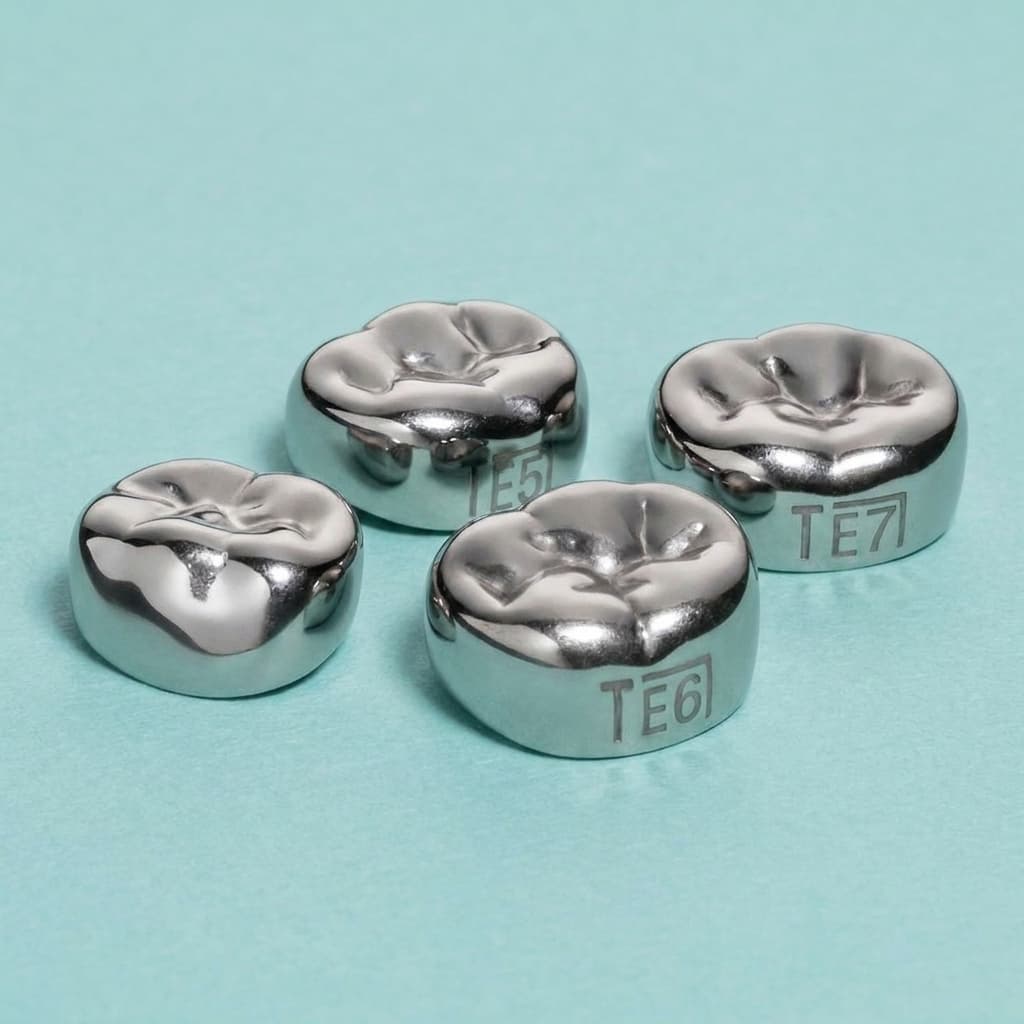
All 48 crowns in one case
SSCrowns Starter Kit
The SSCrowns Starter Kit holds all eight positions in sizes 2 to 7 in a locking case, and a storage case keeps loose refills in order. If you want to feel the fit before stocking up, request free samples.
Frequently asked questions
How many sizes do stainless steel crowns come in?
It depends on the manufacturer. KTR stainless steel crowns come in six sizes (2 to 7) for each of the eight primary molars, for 48 crowns in total.
How do I know what size stainless steel crown to use?
Measure the mesiodistal width of the tooth with a Boley gauge or calipers and pick the crown that matches it, then confirm with a try-in. A correct crown snaps on with firm but gentle finger pressure, does not rock, and leaves closed contacts. If a wall is missing, measure the space or use the contralateral molar.
What do the markings on a stainless steel crown mean?
They identify the tooth position and size. KTR crowns are laser-etched in both Universal and Palmer notation. KTR catalog codes such as DLR read as tooth (D first molar, E second molar), arch (U upper, L lower) and side (R right, L left).
Should I go up a size or crimp the crown?
Change size when the problem is mesiodistal, such as open contacts or a crown that rocks on a well-prepared tooth. Contour and crimp when the width is right but the margin gaps at one wall.
Can I reuse a stainless steel crown that was tried in?
A crown that was tried in but not cemented must be fully cleaned and sterilized before it is used on another patient. Once a crown is cemented it is a single-patient device and is never reused.
This article is general information for dental professionals. It does not replace clinical judgment, the product's instructions for use, or current AAPD guidance. Questions about a specific case? Call us at 1-800-506-5108.
Have a technique or case worth sharing?
We publish guest articles by pediatric dentists, residents and educators. Pitch an idea and write for colleagues.